
Growing Lavender in the Sierra Foothills
Lavender thrives in the Sierra Foothills. The long, dry summers, mild winters, and plenty of sunshine make this region a natural fit for a plant that evolved in the rocky, sun-baked hillsides of the Mediterranean. That said, there are a few things worth knowing before you put a lavender plant in the ground — especially if you’re gardening in the specific conditions of Amador County and the surrounding foothills.
Here’s what I’ve learned from growing lavender at South River Lavender, situated along the South Fork of the Consumnes River at a 2,000-foot elevation. Although we don’t get much snow, maybe an inch or two every other year, it does get cold. We record over 70 frost days consistently every year. Moderate rainfall comes in the Fall and early Spring. Last frost is typically at the end of April.
Timing Your Planting
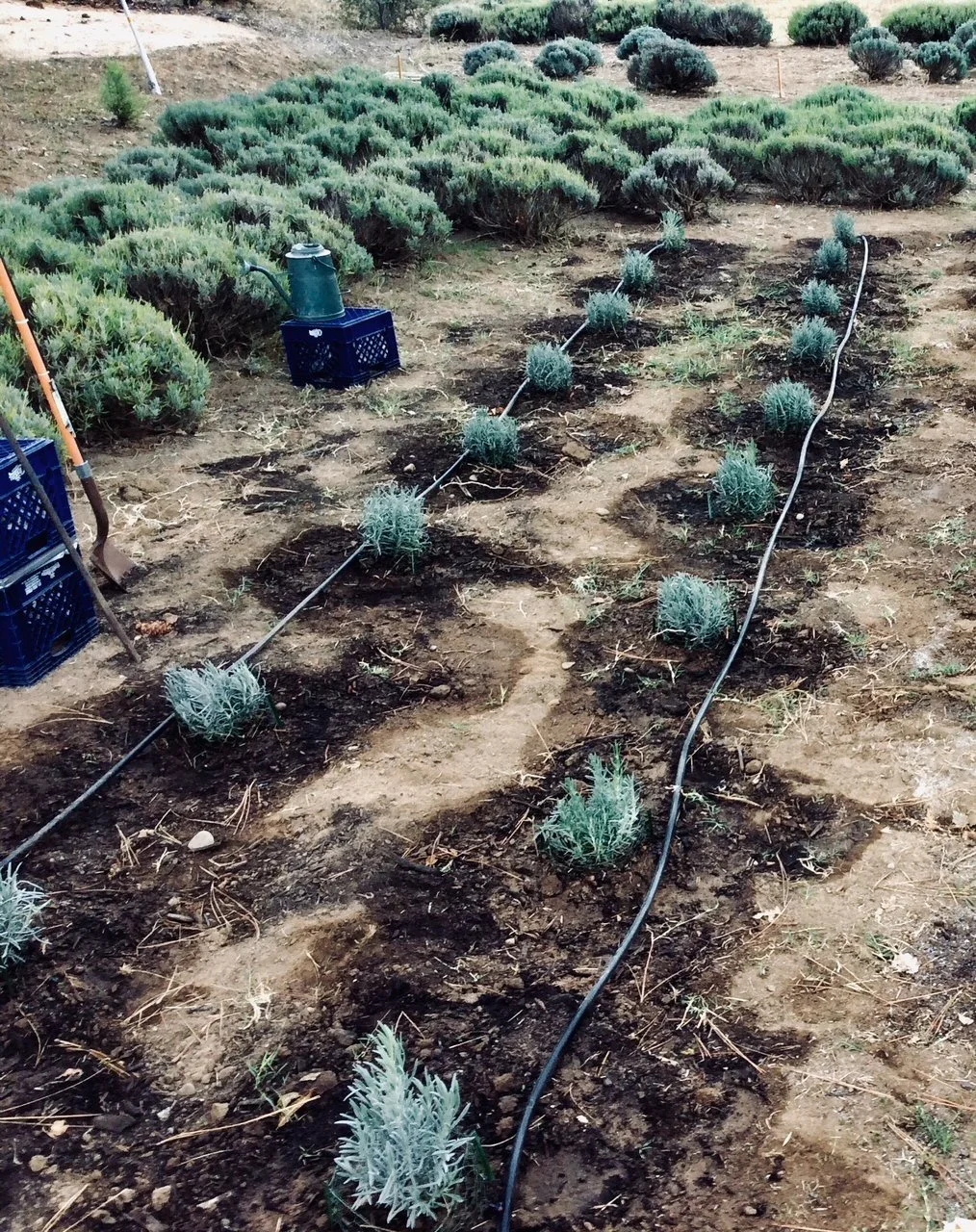
Fall is the best time to plant lavender in the Sierra Foothills. Planting in September or October gives roots time to establish before winter dormancy sets in. Our winters are generally mild enough that young plants can get a solid foothold before the summer heat arrives. To clarify: my lavender plant definition applies to established 6 month or one year old plants, either purchased from a grower, local nursery or started from seed or cuttings in the greenhouse.
Spring planting works too, especially for very young plants, but it requires more vigilance. If you plant in April or May, you’ll need to water consistently through the warming months to help new plants get established before temperatures climb. The window between “settled in” and “stressed by heat” can be surprisingly short at foothill elevations. I recommend watering by drip irrigation for the first two years to maintain adequate soil moisture retention. Watering at the base of the plant rather than overhead is a much more effective way to deliver moisture the plant needs at the root base.
Getting the Soil Right
Good drainage is non-negotiable. Lavender will tolerate a lot — drought, rocky soil, neglect — but it will not tolerate wet feet. This is worth paying close attention to in the foothills, where soils tend toward compact clay, especially in lower-lying areas. Clay holds moisture longer than lavender likes.
Before planting, I always recommend digging a test hole, filling it with water, and watching how fast it drains. If the water hasn’t cleared within an hour or two, you have a drainage problem worth solving before anything goes in the ground. Amending with limestone gravel and very coarse sand can help considerably. Lavender prefers neutral to slightly alkaline soil, which aligns well with the naturally occurring mineral content in much of our foothill region.
Commercial growers often plant in raised rows or mounded beds for this reason. Even a modest raised row can make a meaningful difference in plant health and longevity.
Sun: The More, the Better
Six hours of direct sun is the minimum. More is better. Lavender is a full-sun plant through and through, and at our elevation the light is strong and consistent through the growing season — which works in your favor. Choose your planting location with the summer sun arc in mind and don’t compromise on this one.
Watering and Irrigation
Once established, lavender is remarkably drought tolerant — one of the reasons it does so well in the Sierra Foothills, where dry summers are the norm. But young plants need consistent moisture to get there.
For the first season, I water new plants weekly, paying attention to the balance between moist and soggy. Roots shouldn’t sit in wet soil for more than a few days at a time. After the first year, established plants generally need little supplemental irrigation through winter and can handle our dry summers with only occasional deep watering.
One thing I’ve learned: it’s a more common mistake to overwater lavender than to underwater it. When in doubt, hold off a day or two and see how the plant responds.
Pruning
Annual pruning is done to maintain the health and shape of the plant. Pruning is done at the same time as the flower stems are harvested, but they may need additional trimming at the end of the bloom season to maintain a spherical shape. The plant should be cut back every season into a ball shape by removing all stems and new growth within 3 to 4” of remaining foliage. Leaving uncut long dry stems may cause the plant to splay open from their own weight or inclement weather and become woody. Never cut into the woody part of the plant when trimming. If a plant starts becoming woody, with long thick stalks below the foliage, it will gradually produce fewer and fewer blooms and eventually die. Never trim the woody stems. It will not rebloom and only accelerate the demise of the plant. If a plant becomes too woody it is usually best to remove the plant and start over.
Plan for Growth
A healthy lavender plant will roughly double in size each year for the first three years. Give each plant at least 36 inches of space in every direction — both for future growth and for airflow, which matters for long-term plant health. Crowded lavender is unhappy lavender and overtime will begin to show signs of stress. It should be noted that relocating mature plants (3 years or older) from one in-ground location to another is not advisable. Choose your plant location with care and anticipate growth.
With the right conditions and a little patience, lavender planted in the Sierra Foothills can produce beautiful stems for 15 years or more. It’s one of those plants that rewards early attention and pays you back for a long time.
My favorite books on growing lavender
Ellen Spector Platt’s Lavender – How to Grow and Use the Fragrant Herb
Robert Kourik’s The Lavender Garden – Beautiful Varieties to Grow and Gather.