
The Lavender Grown at South River Lavender:
A Field Guide to Four Varieties
If you’ve ever walked through a lavender farm and noticed that not all the plants look — or smell — quite alike, you’ve already stumbled onto one of the most wonderful things about this plant. Most people think of lavender as a single variety, a purple blur of fragrance and calm. But there are over 15 species and hundreds of named cultivars, each with their own bloom time, color and purpose.
At South River Lavender, in the Sierra Foothills, I tend over 600 mature lavender plants across four carefully chosen varieties. Each one has a distinct fragrance, resilience, and contributes to the overall rhythm of the growing season. Here’s a closer look at what’s growing in the fields.
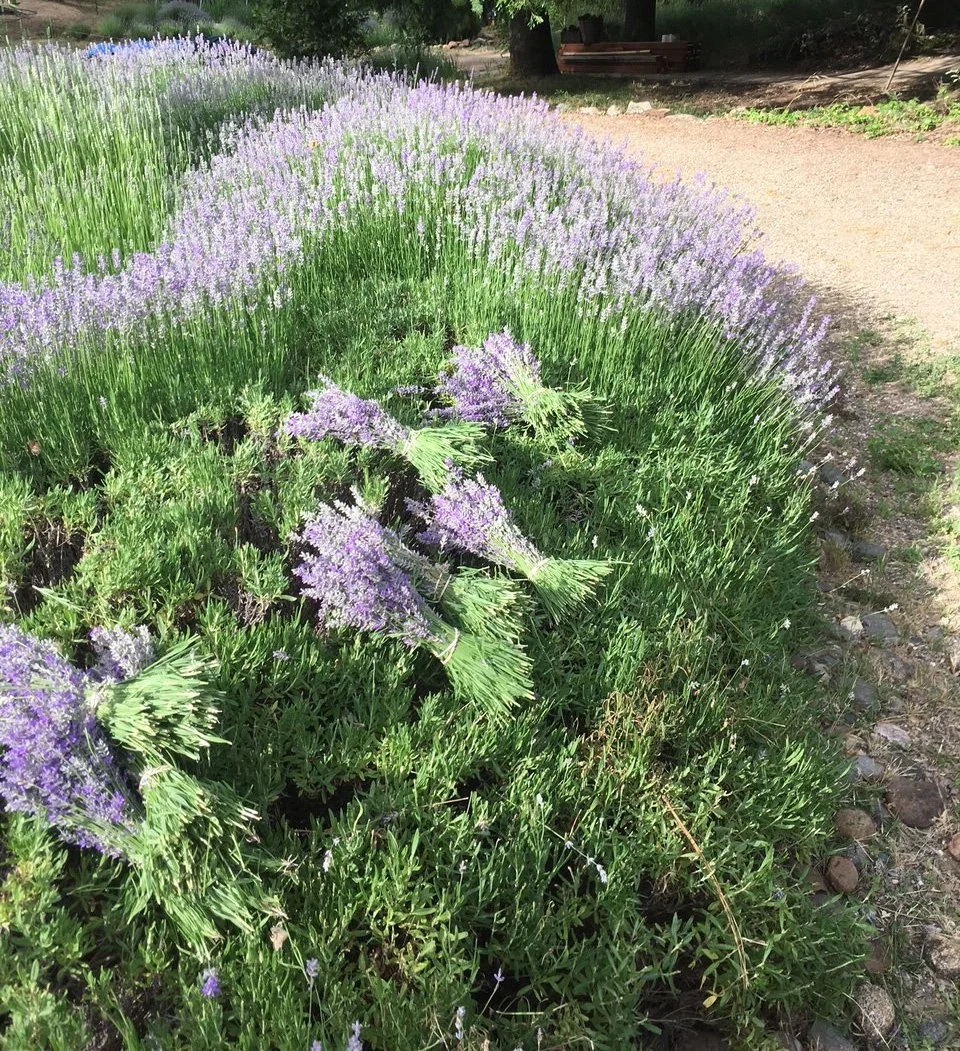
Most people don't realize there are hundreds of lavender varieties. At South River Lavender, four of them tell the story of an entire season.
English Lavender: The Season Opener
Botanical name: Lavandula angustifolia (also called “true lavender”)
English lavender is typically a smaller, more compact bush with pale green foliage and flower spikes that reach 8 to 10 inches. It’s on the quieter, more delicate side of the lavender world — and the first to bloom here in the Spring.
Munstead
Munstead is the variety that officially begins harvest season at South River Lavender. Its short stems and soft, blue-lavender color make it a gentle opening act. I watch the plants in our farm entry garden closely in late May. When Munstead shows its first color and the bees begin to arrive in larger numbers, I know it is time to harvest. Besides the delicate beauty of the bloom, the dried flower buds are a popular culinary choice. Culinary lavender buds are available as part of our lavender product collection at the market.
Hidcote
About a week or two behind Munstead, Hidcote arrives with considerably more drama. Its short flower spikes are a deep, intense purple — the richest color of all the lavender varieties grown here — and it serves as a natural bridge into the Lavandin season. If Munstead is the opener, Hidcote is the one that gets the crowd on their feet. The bloom season is very short. (two or three weeks) If the flower stems are not removed from the plant in the early stages of flowering they quickly begin to “brown”, so it is important to harvest the bloom when 25% of the flowers have opened so the stems will retain their intense color as they dry. It is my favorite lavender cultivar to craft because of its rich color. Hidcote is also a good culinary choice
Lavandin: The Long-Stemmed Stars of Summer
Botanical name: Lavandula x intermedia (often called “French lavender”)
Lavandin is a sterile hybrid of English lavender and spike lavender. It produces long, graceful flower spikes — 12 to 18 inches — and has a distinctly stronger fragrance than its English cousins. These are the varieties that define midsummer at the farm and make up the heart of what I bring to the Amador County Farmers Market each season.
Provence
Provence begins to show color as the English lavender harvest winds down at the end of June. The long, graceful flower stems are lighter in color, similar to Munstead, with a sweet, intoxicating fragrance. It’s the kind of lavender aroma that fills a room without overwhelming it. The flowers, similar to Hidcote, must be harvested at an early stage of blooming to preserve their color. While they maintain their fragrance when dried, they are generally considered less visually appealing as dried bundles compared to the dried Grosso bundles.
Grosso
Grosso is the undisputed work horse of South River Lavender. It’s the last Lavandin to arrive, but it arrives with authority and in quantity. Grosso is by far the most popular and plentiful lavender plant grown on the farm. The deep purple-blue spikes and robust, resinous aroma are unlike any other variety I harvest. Surprisingly, Grosso is a relatively modern cultivar from the early 1960’s. It was bred specifically for essential oil production. It consistently outsells everything on the market cart, whether it’s fresh-cut bouquets in June, dried bundles in August, farm distilled essential oil or dried lavender bud sachets sold throughout the year. If you’ve ever smelled a fresh cut lavender bundle and thought — that’s it, that’s the one — you were probably smelling Grosso. It should be noted that Lavandins are generally not used as a culinary ingredient. It has a much more bitter taste than the milder English lavender varities.
Beyond Lavender: The Supporting Cast
Lavender may be the headliner, but it doesn’t grow alone here. I also grow and harvest rosemary, several varieties of eucalyptus, native California sages, bay laurel, cedar and manzanita — all harvested throughout the year and used in handcrafted wreaths, essential oils, and other seasonal arrangements. These plants share the land with the lavender, reflect the character of the Sierra Foothills climate, and give the farm products a distinctly local, rooted quality.
When to Find Fresh-Cut Lavender
The season moves quickly. Fresh-cut lavender bouquets are available in June and July, while dried lavender bundles become the main offering as August temperatures climb. Essential oils, sachets, soap and wreaths are available throughout the year at all Amador County Farmers Markets.
If you’d like to know what’s in bloom before you make the trip, sign up for seasonal updates below, or come find me at the Sutter Creek, Ione, Plymouth or Volcano markets. The sweet aroma of lavender will lead you to my cart.